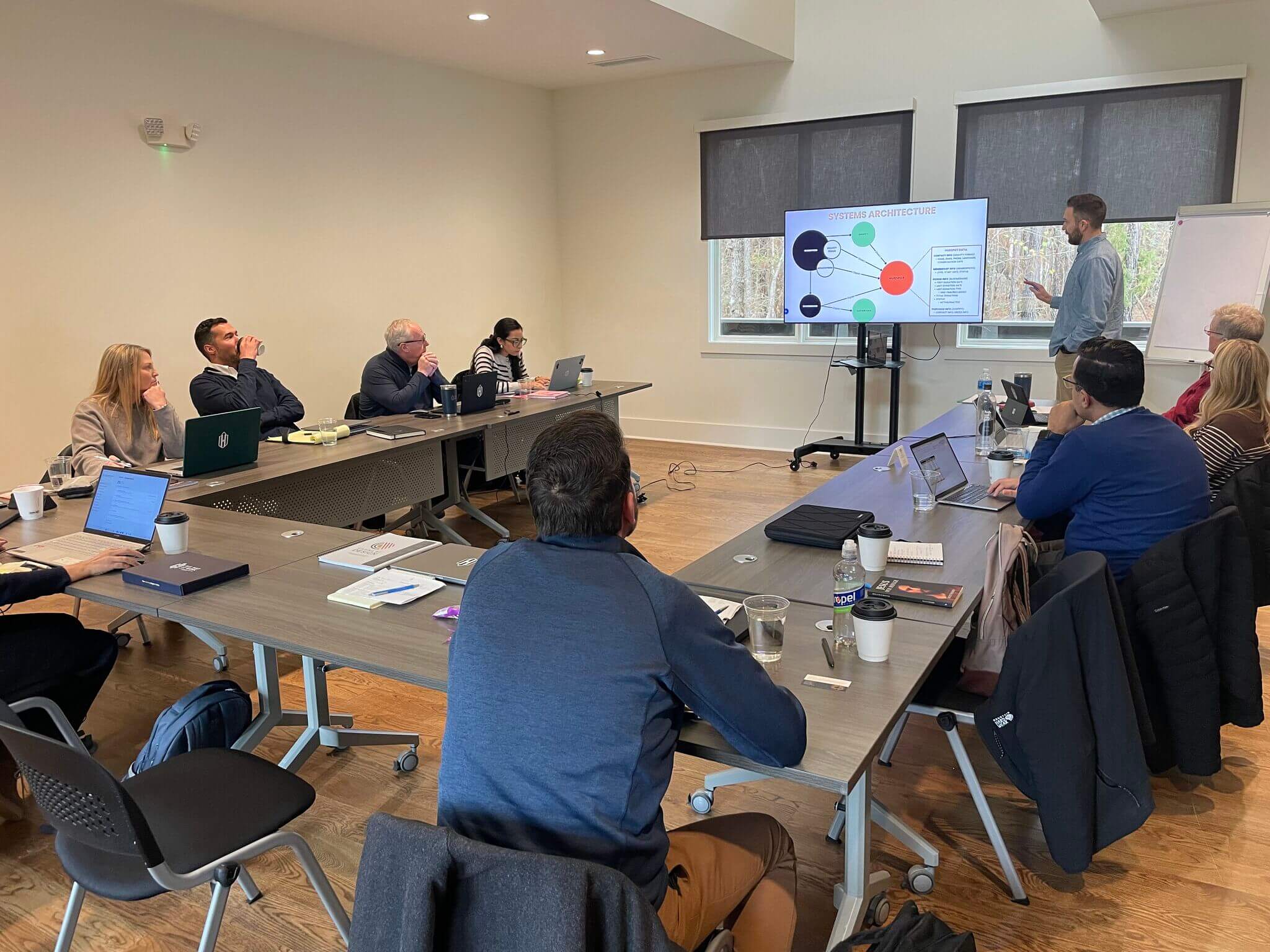
A good company offsite should do more than get everyone out of the office. The right setting gives team members room to make key decisions, work through priorities, strengthen relationships, and return with greater mental clarity.
A productive offsite starts with a clear objective: What does this team need to accomplish together that getting away from the office brings more clarity and purpose?
What Makes a Good Overnight Offsite ?
The best offsites have clear objectives, the right people, and space to think. They create an peaceful environment where team members can step away from digital distractions and focus on what’s important.
For some teams, that means setting a new strategy. For others, it means rebuilding trust, strengthening team dynamics, or giving leaders time to work through a specific business challenge.
A thoughtful planning process should also consider accessibility needs, dietary needs, and different ways people prefer to participate. If you need help turning your goal into a practical schedule, start with our step-by-step planning checklist.
10 Company Offsite Ideas That Deliver Results
The best offsite ideas are tied to a specific outcome. Here are 10 ways to shape an offsite around what your company or team actually needs.
1. Strategic Planning
When your team needs to decide where the organization is going, a change of scenery can create valuable distance from the day-to-day, especially when you need to overcome obstacles or solve problems that regular meetings may not resolve.
What it's for: Establishing priorities, making key decisions, and creating a shared vision for the future.
Who to invite: The executives, department leaders, or other decision-makers who own the strategy.
How long: One to three days.
What to hold in the meeting room: Review where the organization stands, identify opportunities and challenges, and agree on priorities. Make room for creative ideas, problem solving skills, and breakthrough ideas that support strategic alignment.
2. Annual or Quarterly Planning
Not every offsite needs to tackle a longer term strategy. Sometimes the most useful meeting is a focused look at the next quarter or year.
What it's for: Turning broad goals into practical priorities and aligning leaders around what matters most.
Who to invite: The leadership or functional team responsible for execution.
How long: One to two days. Build an offsite agenda that may include back-to-back presentations but also leaves room for reflection and discussion.
What to hold in the room: Review recent performance, discuss priorities, identify dependencies, and clarify who owns the work needed to complete tasks. Consider scheduling regular check ins after the offsite so decisions continue moving forward.
3. Leadership Team
Leadership teams often spend their regular meetings moving from one urgent issue to another. A dedicated offsite creates room to step back, reflect and work at the issues at hand and the broader vision. Feedback on venue and agenda quality helps assess success outcomes.
What it's for: Improving communication, strengthening relationships, and addressing issues that require a deeper level of conversation.
Who to invite: The entire leadership team or the smallest group responsible for the outcomes being discussed.
How long: One to two days.
What to hold in the room: Organizational priorities, leadership dynamics, difficult decisions, and the questions that do not fit neatly into a weekly meeting. Interactive exercises can also help leaders practice better communication skills and build stronger connections.
If your group needs more time away from the usual pace, Heritage also welcomes leadership offsites in Georgia in a setting designed for focused collaboration.
4. Remote Team Gathering
Remote and distributed teams can benefit from meeting in person for reasons that go beyond work. When colleagues rarely share the same physical space, a shared experience in informal settings can strengthen working relationships and create more meaningful conversations.
What it's for: Reconnecting a distributed team and combining meaningful work with time together.
Who to invite: The remote team or a defined cross-functional group, including team members from different teams who need stronger connections.
How long: Two to three days.
What to hold in the room: Team priorities, collaborative sessions, shared meals, informal interactions, and activities that help colleagues connect outside their usual video calls. Outdoor activities can give people another way to interact, while shared meals often act as a universal language across different personalities and roles.
5. Product or Roadmap Discussion
Product teams sometimes need to get away from the constant flow of interruptions, requests, and short-term decisions to think about what comes next.
What it's for: Setting product direction, resolving competing priorities, and building a shared roadmap.
Who to invite: Product leaders, key stakeholders, engineering or design representatives, and anyone responsible for major roadmap decisions.
How long: One to two days.
What to hold in the room: Customer needs, current performance, upcoming opportunities, product priorities, tradeoffs, and decisions about what not to pursue. A creative workshop can give teams dedicated time for fresh thinking and spark innovation.
6. Executive Team Relationship-Building
Strong executive teams need more than aligned calendars. They also need trust, candid communication, and opportunities to share and understand how colleagues and their customers think.
What it's for: Strengthening relationships, improving communication, and creating space for more meaningful conversations among executives.
Who to invite: The executive team and, when appropriate, a facilitator or other essential participant.
How long: One to three days.
What to hold in the room: Organizational challenges, leadership expectations, individual perspectives, and conversations that benefit from privacy and uninterrupted time. Give people room for informal interactions rather than filling every hour with meetings.
7. New Executive Onboarding
When a new executive joins an organization, onboarding should go beyond learning systems and reviewing policies, financial data, and key documents. An offsite can help a new leader understand company culture while gaining a deeper understanding of the organization.
What it's for: Building trust and alignment with the leadership team during a leadership transition.
Who to invite: The new executive, relevant members of the leadership team, and key stakeholders.
How long: One to three days.
What to hold in the room: Organizational history, current priorities, expectations, decision-making styles, and opportunities for the new leader to ask questions openly. This dedicated time can help improve communication and chart the company direction..
8. Merger or Integration
When two organizations or teams come together, people need space to understand more than reporting structures. They need to talk about how they will actually work together.
What it's for: Building alignment during a merger, acquisition, partnership, or major organizational transition.
Who to invite: Leaders and key representatives from each side of the merger.
How long: One to three days.
What to hold in the room: Shared goals, responsibilities, communication expectations, cultural differences, decision-making processes, and practical questions that need resolution. Interactive exercises can help different teams solve problems together and build trust around a shared accomplishment.
9. Values and Culture Reset
Sometimes an organization does not need a new strategy. It needs to reconnect with why the strategy matters.
What it's for: Reexamining organizational values, culture, purpose, and the behaviors that support them.
Who to invite: Leadership, culture teams, or a representative group of employees, depending on the goal.
How long: One to three days.
What to hold in the room: What is working, what has changed, what the organization wants to preserve, and what needs to evolve. Creating opportunities for honest discussion can help teams find a shared vision and bring more lasting value to company culture.
10. Rest-and-Reconnect
Productivity does not always come from adding another session to the agenda. Sometimes the most productive decision is to dedicate time to rest and the team’s well being.
What it's for: Restoring energy, strengthening relationships, reducing stress, and creating space for focused thinking without a packed schedule.
Who to invite: A leadership team, department, or group that has been carrying a demanding workload.
How long: One to three days.
What to hold in the room: Only the conversations that genuinely need to happen together. Leave generous space for meals, walks, reflection, and informal interactions.
For teams dealing with constant demands, stepping away can be useful in itself. Why teams need to step away from constant busyness is worth considering before you build another full calendar.
Plan Your Next Company Offsite at Heritage
The right offsite does not need to be complicated. Start with the outcome you want, invite the people who can help achieve it, and choose a peaceful stress free setting that gives the group enough room to focus.
Heritage offers a peaceful overnight destination for corporate retreats, company retreats, leadership gatherings, and other organizational offsites..
With 200 rural acres and an easy drive from Atlanta, flexible meeting spaces, elevated accommodations, on-site chef-inspired dining, and informal spaces away from everyday distractions, Heritage gives teams a place
intentionally built for productive work, creative thinking, and quality time together.
The setting can also enhance personal connections by giving people a memorable experience outside their usual routine. Rather than simply completing another task, teams can return with clearer communication, stronger relationships, and fresh thinking.
Frequently Asked Questions
What Is the Purpose of a Company Offsite?
A company offsite brings a team together away from its usual workplace to focus on a specific goal. That might include strategic planning, leadership alignment, relationship-building, or product planning. .
How Many Days Should a Company Offsite Be?
A one-or two day offsite can be enough for focused planning, while two or three days allow more room for team connection, shared meals, and unstructured time.
Who Should Attend a Company Offsite?
Invite the people who can contribute to or act on the outcome you want to achieve. Depending on the purpose, that might mean an executive team, department leaders, a cross-functional group, or a larger group of employees. Consider accessibility needs and dietary needs when planning for the full group.
Why Are Company Offsite Team Building Activities Important?
Useful company offsite activities can include strategic planning sessions, team discussions, shared meals, informal activities, and team building exercises. Planned activities should support the gathering's purpose rather than fill the schedule simply for the sake of having activities. A creative workshop or other team building exercise may encourage creative thinking and problem solving skills.