.png)
Welcome to Georgia’s Parish
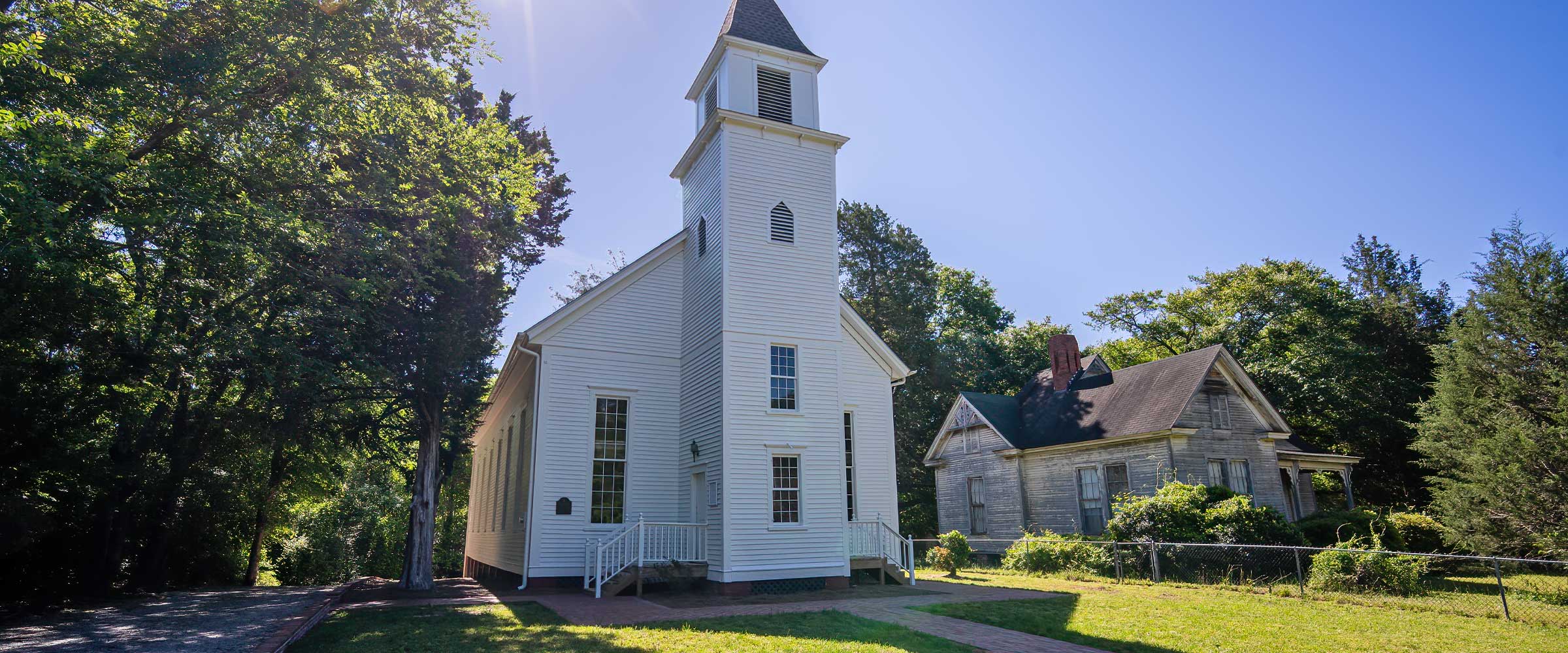
Built in 1883 by Georgia’s first Catholic congregation, the Church of the Purification of the Blessed Virgin Mary stands as a quiet symbol of resilience. Once the heart of Catholic life in the state, this haven has weathered seasons of both flourishing and decline—yet it has endured. Now lovingly restored by our Heritage community, the church once again opens its doors, inviting you into a living glimpse of history and a faith that continues to thrive.


Where Faith Took Root
Long before Heritage, a humble log-cabin church rose from the red clay of Georgia—built in the early 1790s by English Catholic settlers from Maryland who sought faith, fellowship, and a new beginning. In what would become the community of Locust Grove, these pioneers formed Georgia’s first Catholic congregation, soon joined by Irish and French families who helped the young community flourish.
By 1821, they had constructed a larger church that welcomed not only the sacraments, but also Georgia’s first Catholic school, Locust Grove Academy. When the railroad ushered in a new era of movement and possibility, the congregation responded with courage and vision—relocating their church to Sharon in 1877 and rebuilding it in 1883 with tall sash windows and a bell tower reflecting the spirit of the time.
.JPG)
Across from that church lies Purification Cemetery, the final resting place of many of Georgia’s earliest Catholic families—a quiet witness to centuries of faith. Yet time would not always be so gentle. As the boll weevil devastated the land and families moved away, the once-vibrant parish slipped into stillness. For decades, the Church of the Purification stood tucked among the trees, a silent relic of devotion nearly lost. But in 2016, something sacred stirred again.
The mission to restore this holy ground began. Today, the church stands lovingly returned to its 1883 beauty, once more offering peace, renewal, and liturgical life to all who come. It is both a spiritual anchor and a living monument to the enduring legacy of Catholic faith in Georgia.