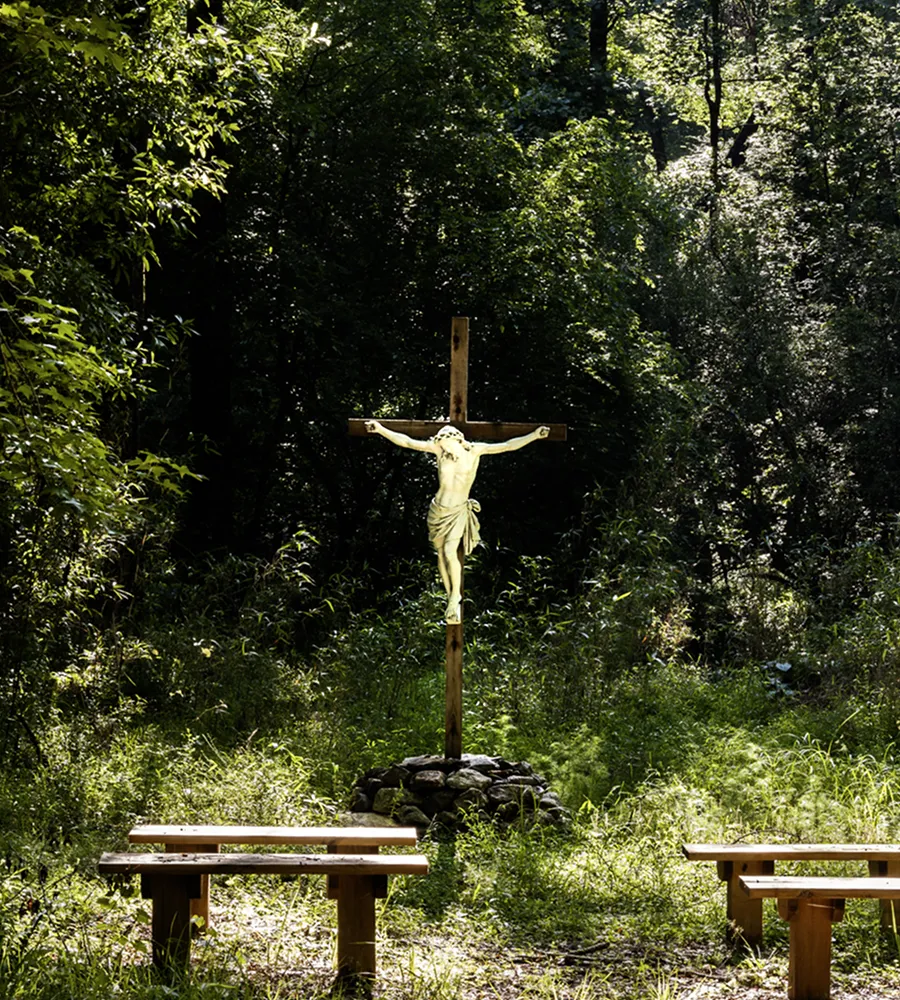
Prayer can look different from one moment to the next, and in the Catholic tradition the main types of prayer include five forms, blessing and adoration, petition, intercession, thanksgiving, and praise—along with three expressions of prayer: vocal, meditative, and contemplative. Sometimes prayer is spoken aloud with a congregation. At other times, it is a quiet request offered to God in the middle of a difficult day. We may pray the Rosary, sit before the Blessed Sacrament, give thanks before a meal, read Scripture slowly, or simply rest in God's presence.
These are not competing approaches to prayer. They are different ways of turning the heart and mind toward God, and learning to recognize them can help Catholics—and anyone seeking to deepen prayer through the Catholic tradition, pray with more clarity, intention, and trust in different seasons of life.
What Are the Different Types of Prayer?
The different types of prayer reflect the many ways we relate to God. We worship Him. We ask for help. We pray for others. We give thanks. We praise Him simply for who He is. Each of these movements of the heart has a place in the Catholic life of prayer.
According to the Catechism of the Catholic Church, there are five principal forms of prayer:
- Blessing and adoration
- Petition
- Intercession
- Thanksgiving
- Praise
The Catechism also identifies three expressions of prayer: vocal prayer, meditative or reflective prayer, and contemplative prayer.
The five forms describe the purpose or movement of prayer. The three expressions describe ways that prayer may be practiced.
Together, they offer a fuller picture of the many ways we can draw near to God.
What Are the Five Forms of Catholic Prayer?
The five forms of Catholic prayer are blessing and adoration, petition, intercession, thanksgiving, and praise.
We may move through several of these forms during a single Mass, a Holy Hour, or even a few quiet minutes of personal prayer. Understanding each one can help us recognize the richness already present in our prayer lives.
1. Blessing and Adoration
Blessing and adoration begin with the recognition that God is God and we are His creation.
In prayer of blessing, we respond to the gifts God has given us. The Catechism describes blessing as an encounter between God and the human person: God's blessing comes to us, and our prayer rises in response.
Adoration takes this recognition deeper. We humbly acknowledge God's greatness, goodness, and holiness.
Eucharistic Adoration is one of the most recognizable Catholic examples. Sitting or kneeling before the Blessed Sacrament, we turn our attention toward Christ. We may arrive with many thoughts and concerns, but adoration invites us to begin with His presence.
This form of prayer reminds us that we do not always need to start with a request. Sometimes, prayer begins simply by turning toward God.
2. Prayer of Petition
A prayer of petition is a prayer in which we ask God for something we need.
These prayers may be simple and deeply personal: help in making a decision, strength during illness, forgiveness after sin, or peace in a season of uncertainty.
The Our Father, also known as the Lord’s Prayer, offers the clearest model. Jesus teaches us to ask for our daily bread, forgiveness, guidance, and deliverance from evil.
Petition is not about presenting God with a list of demands. It is an honest expression of dependence and trust. We bring our needs before God while remaining open to His wisdom and will.
Even the brief prayer, “Lord, help me” or “Jesus I Trust in You” can be a sincere prayer of petition.
3. Prayer of Intercession
Intercession means praying on behalf of someone else.
When we intercede, our attention moves beyond our own needs. We may pray for a family member, a friend, a parish, a community, those who are suffering, people we may never meet, fellow believers, and all the saints; Ephesians 6:18 encourages praying for all God’s people.
Catholics also ask the Blessed Virgin Mary and the saints to intercede for us. This reflects the communion of saints and the belief that the Church is united in Christ.
Romans 8:34 says that Christ Jesus intercedes for believers at the right hand of God in heaven.
Intercessory prayer can be both specific and broad. We might pray for a loved one facing surgery, for the sick, or for each other to be healed, as James 5:16 says. Jesus Christ also shows us this self-giving pattern of prayer.
In both cases, we place others before God with love and trust.
4. Prayer of Thanksgiving
Thanksgiving is our response to God's gifts.
Some moments of gratitude come easily, and thanking God is central to this form of prayer. We give thanks for a joyful answer to prayer, a new beginning, a restored relationship, or an unexpected blessing.
At other times, thanksgiving requires greater trust. We may still be waiting for clarity or walking through difficulty, yet choose to recognize God's presence and faithfulness.
Philippians 4:6 encourages prayer with thanksgiving.
The Eucharist is at the heart of Catholic thanksgiving. The word Eucharist comes from a Greek word connected with thanksgiving, reminding us that gratitude is woven deeply into Catholic worship, and thanksgiving focuses the heart on God's gifts and faithfulness.
A prayer of thanksgiving does not need to be long. Pausing to say, “Thank You, Lord, for this day,” can turn an ordinary moment into prayer.
5. Prayer of Praise
Praise focuses entirely on who God is.
While thanksgiving often responds to what God has given or done, praise rejoices in God Himself and grows out of deeper knowledge of His character. We praise His goodness, holiness, mercy, power, and love.
The Psalms are filled with prayers of praise. Micah 7:18 is another verse of praise. So are the Gloria and other prayers of the Mass.
Praise helps lift our attention beyond immediate circumstances; prayer helps sustain hope by fixing our attention on God's unchanging nature. It reminds us that God's nature does not change with our mood, schedule, or struggles.
We praise God because He is worthy of praise.
What Are the Three Expressions of Prayer?
The Catholic tradition also describes three expressions of prayer: vocal prayer, meditative or reflective prayer, and contemplative prayer.
These are not levels that we complete one by one. One is not necessarily “better” than another. They are connected ways of entering into prayer with our words, thoughts, attention, and hearts.
Vocal Prayer
Vocal prayer uses words, whether spoken aloud or prayed silently.
For many Catholics, this is one of the first ways we learn to pray. The Our Father, Hail Mary, Glory Be, and prayers of the Mass are familiar examples.
The Rosary also includes vocal prayer. Its repeated prayers give structure to our attention while inviting us to reflect on the Biblical mysteries of Christ's life.
Vocal prayer can be personal or communal. We can whisper a prayer alone or join hundreds of voices at Mass.
Words give expression to what is in the heart and unite us with the prayer of the Church.
Meditative or Reflective Prayer
The Catechism uses the word meditation for an expression of Christian prayer centered on a prayerful search for understanding and a deeper response to God. It can be helpful to think of this as meditative or reflective prayer.
Scripture often provides the focus.
In lectio divina, for example, a person reads a passage of Scripture slowly and prayerfully. Rather than rushing to finish a chapter, the reader listens for a word, phrase, or truth that draws the heart toward God.
The Rosary can also have a reflective dimension as we consider the mysteries of Christ's life. Sacred art may invite a similar prayerful attentiveness through Visio Divina, a way of praying with sacred art.
The purpose is not simply to analyze an idea. Reflective prayer allows what we encounter to shape our response to God.
For those seeking to spend more intentional time considering questions of belief and spiritual life, a thoughtful guide to faith and reflection can also provide a helpful place to begin.
Contemplative Prayer
Contemplative prayer is a quiet, attentive resting in the presence of God.
Words may become fewer. Rather than filling every moment with speaking or reading, we become still and give loving attention to God, ready not only to speak but also to hear Him speak.
This kind of prayer cannot be forced into a perfect method. It is a gift and a relationship. We make ourselves available to God and remain present to Him. In that stillness, the soul and spirit grow quiet before God.
Silence can be especially helpful here. The constant noise of daily life often leaves little room for stillness, which is why a silent retreat for deeper prayer can create meaningful space for a more attentive prayer life.
Contemplative prayer reminds us that prayer is not only about what we say to God. It is also about being with Him, and it can dispose of the heart toward effective prayer and repentance.
Do I Need to Choose One Way to Pray?
A healthy prayer life often includes different forms of prayer.
There may be mornings when vocal prayer gives you the structure you need. At another time, you may feel drawn to read a Gospel passage slowly and reflect on Christ's words.
During a difficult season, petition may come naturally. When someone you love is suffering, intercession may fill much of your prayer. In a moment of unexpected beauty, thanksgiving or praise may rise without planning.
The liturgical life of the Church also brings different forms of prayer together, and some are offered together corporately. The Mass includes praise, petition, intercession, thanksgiving, and adoration.
Acts 1:14 also shows the disciples praying together in this way. You do not need to force every type of prayer into your daily routine. Instead, remain attentive to how God may be inviting you to pray in the season you are living.
How Can I Deepen My Prayer Life?
Deepening prayer often begins by creating opportunity and time.
That may mean setting aside a few quiet minutes before the day begins, returning to Scripture, praying the Rosary more slowly, or spending time in Eucharistic Adoration.
Place can also affect our attention. Stepping away from familiar distractions may help us listen more carefully and notice what has been difficult to hear in the rush of ordinary life.
At Heritage, guests can walk through the prayer gardens at Heritage, spend time in quiet reflection, or visit The Stations of the Resurrection prayer space at Heritage. The peaceful grounds create room to slow down and approach prayer with greater intention.
You do not need to arrive with the perfect words or a detailed prayer plan. Sometimes, the first step is simply creating enough quiet to turn your attention toward God.
Make Space for Prayer at Heritage
There are many types of prayer, but each begins with an invitation to draw closer to God.
Whether you are praying aloud, reflecting on Scripture, asking for help, interceding for someone you love, giving thanks, or resting quietly in God's presence, prayer makes room for relationship.
Sometimes, a change of pace and place can help us return to that relationship with renewed attention.
Heritage offers a peaceful setting rooted in historic Christian heritage, with quiet grounds and prayer spaces that invite reflection. Come for an individual retreat, walk the prayer gardens, or simply make time to step away from daily noise and listen.
Explore Heritage and discover a peaceful place to deepen your prayer life.
Frequently Asked Questions
What are the main types of prayer in Catholicism?
The Catechism identifies five main forms of prayer: blessing and adoration, petition, intercession, thanksgiving, and praise. These reflect different ways we relate to God.
What is the difference between forms and expressions of prayer?
Forms of prayer describe the purpose or intention (such as asking, thanking, or praising), while expressions of prayer describe how we pray (such as speaking, reflecting, or resting in silence).
What is a simple example of a prayer of petition?
A prayer of petition can be as simple as saying, “Lord, help me,” or asking God for guidance, strength, or forgiveness.
Can I use more than one type of prayer at the same time?
Yes. Many prayers naturally include multiple forms. For example, the Mass includes praise, thanksgiving, petition, and intercession.
What is contemplative prayer in simple terms?
Contemplative prayer is quietly resting in God’s presence. It involves less speaking and more attentive listening and being with God.
<script type="application/ld+json">{"@context":"https://schema.org","@graph":[{"@type":"FAQPage","@id":"https://www.heritagega.org/blog/types-of-prayer-catholic-guide#faq","url":"https://www.heritagega.org/blog/types-of-prayer-catholic-guide","isPartOf":{"@id":"https://www.heritagega.org/blog/types-of-prayer-catholic-guide#article"},"mainEntity":[{"@type":"Question","name":"What are the main types of prayer in Catholicism?","acceptedAnswer":{"@type":"Answer","text":"The Catechism identifies five main forms of prayer: blessing and adoration, petition, intercession, thanksgiving, and praise. These reflect different ways we relate to God."}},{"@type":"Question","name":"What is the difference between forms and expressions of prayer?","acceptedAnswer":{"@type":"Answer","text":"Forms of prayer describe the purpose or intention (such as asking, thanking, or praising), while expressions of prayer describe how we pray (such as speaking, reflecting, or resting in silence)."}},{"@type":"Question","name":"What is a simple example of a prayer of petition?","acceptedAnswer":{"@type":"Answer","text":"A prayer of petition can be as simple as saying, “Lord, help me,” or asking God for guidance, strength, or forgiveness."}},{"@type":"Question","name":"Can I use more than one type of prayer at the same time?","acceptedAnswer":{"@type":"Answer","text":"Yes. Many prayers naturally include multiple forms. For example, the Mass includes praise, thanksgiving, petition, and intercession."}},{"@type":"Question","name":"What is contemplative prayer in simple terms?","acceptedAnswer":{"@type":"Answer","text":"Contemplative prayer is quietly resting in God’s presence. It involves less speaking and more attentive listening and being with God."}}]}]}</script>.jpg)
.jpg)