In a world filled with distractions, many people long for a deeper, more meaningful prayer life. While Scripture reading, silent prayer, and meditation have long been foundational spiritual practices, there is another ancient method that invites believers to encounter God in a unique and transformative way: Visio Divina, or “sacred seeing.”
Much like Lectio Divina (“divine reading”), which prayerfully engages Scripture through slow and reflective reading, Visio Divina invites us to contemplate sacred images, artwork, or scenes as a pathway to prayer. Rather than merely observing a piece of art, we allow it to become a doorway into God's presence, helping us meditate on biblical truths and listen for the Holy Spirit's guidance.
What Is Visio Divina?
The practice of Visio Divina has roots in the Christian tradition, where sacred art was often used to teach biblical stories and inspire devotion. Before widespread literacy, stained-glass windows, icons, paintings, and sculptures helped believers engage with the Gospel through visual storytelling.
Today, Visio Divina remains a powerful spiritual discipline. The practice involves slowly observing a sacred image and prayerfully reflecting on what God may be revealing through it. Instead of analyzing the artwork intellectually, participants are encouraged to notice details, emotions, colors, symbols, and movements that draw their attention.
As with Scripture meditation, there are no right or wrong observations. The goal is not artistic critique but spiritual attentiveness.
How Sacred Art Enhances Biblical Meditation
One of the greatest benefits of Visio Divina is its ability to help us enter more fully into a biblical passage.
When we read Scripture, we often move quickly through familiar stories. Sacred art encourages us to slow down and see the scene with fresh eyes. An artist's interpretation can highlight details we may have overlooked and invite us to imagine ourselves within the story.
For example, consider the account of Jesus calming the storm in Mark 4:35-41. Reading the passage provides the facts of the event. Viewing a painting of frightened disciples clinging to the boat while Jesus remains calm may help us connect emotionally with their fear and uncertainty. Suddenly, the story becomes more personal. We may begin to recognize our own storms and hear Christ's invitation to trust Him.
Sacred art engages the imagination, emotions, and senses, helping biblical truths move from the head to the heart.
A Simple Practice for Using Visio Divina with Scripture
Visio Divina can be practiced individually or in a group setting. It pairs beautifully with a passage of Scripture and requires only a few moments of intentional focus.
1. Begin with Prayer
Ask God to quiet your mind and open your heart to His presence. Invite the Holy Spirit to guide your reflections.
2. Read a Bible Passage Slowly
Choose a passage that connects with the artwork you will be viewing. Read it slowly, perhaps more than once, allowing certain words or phrases to stand out.
3. Observe the Image
Spend several minutes looking at the artwork. Notice what immediately captures your attention. What emotions arise? What details seem significant?
Ask yourself:
- What do I see?
- What am I drawn toward?
- What surprises me?
- Where do I sense God's presence?
4. Reflect and Listen
Consider how the image illuminates the Scripture passage. Is God inviting you to notice something new? Does the artwork reveal a deeper truth about Christ, yourself, or your current circumstances?
5. Respond in Prayer
Offer your thoughts, questions, gratitude, or concerns to God. Allow the image and Scripture to become part of your conversation with Him.
The Spiritual Benefits of Visio Divina
Beyond simply slowing us down, Visio Divina invites us to engage with God in a way that reaches deeper than words alone. By combining visual reflection with prayer, the practice creates space for both the mind and heart to respond to God's presence, making spiritual truths more vivid and personal.
It Encourages Slower, More Intentional Prayer
Many of us approach prayer with busy minds and lengthy to-do lists. Visio Divina helps us pause and become fully present. By focusing on a single image, we cultivate attentiveness and silence, creating space to hear God's voice.
It Engages the Whole Person
God created us as visual beings. Sacred art speaks not only to the intellect but also to the imagination and emotions. This holistic engagement often leads to deeper spiritual insight and a more personal connection with Scripture.
It Reveals New Dimensions of Familiar Passages
Even passages we have read countless times can come alive through visual contemplation. An image may draw our attention to a gesture, expression, or relationship that opens new avenues of reflection.
It Helps Us Encounter Christ Personally
Sacred art often portrays moments from the life of Jesus in ways that invite participation. Rather than remaining distant observers, we begin to place ourselves within the biblical story and consider how Christ is speaking to us today.
It Fosters Spiritual Rest
In a culture dominated by constant noise and digital stimulation, Visio Divina offers a gentle invitation to stillness. The practice encourages us to rest in God's presence without striving, performing, or producing.
Bringing Sacred Art into Everyday Faith
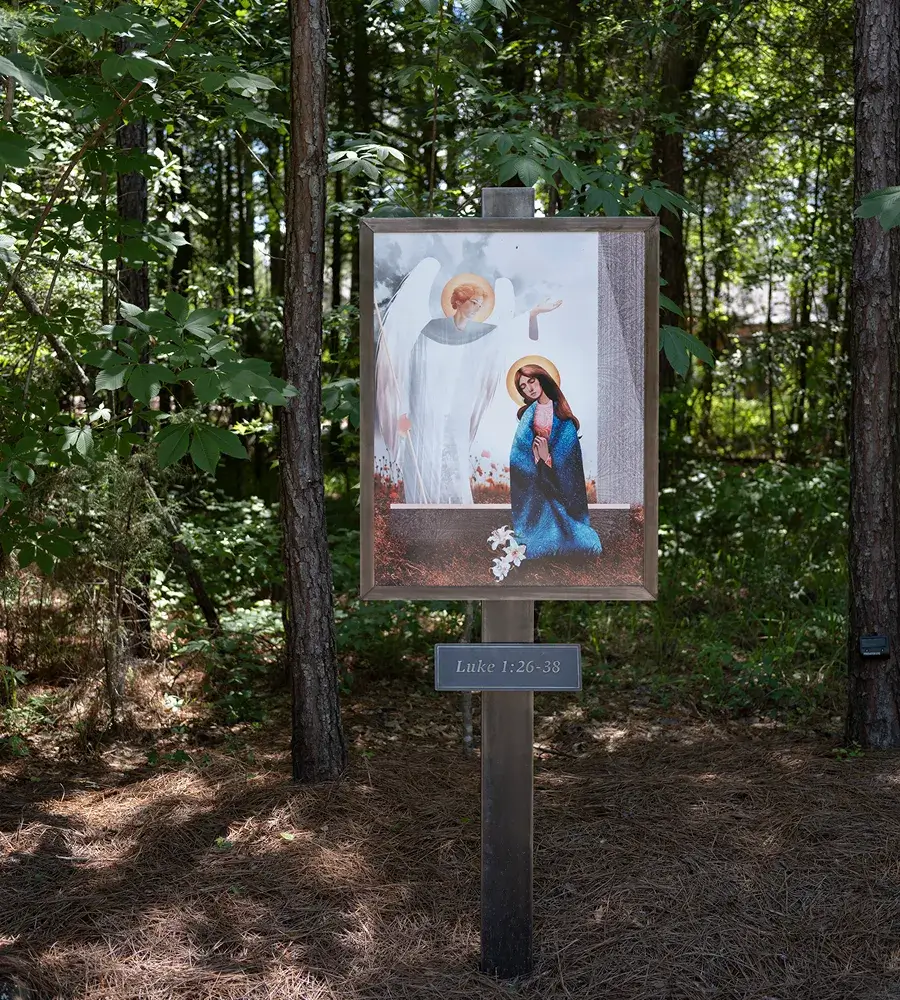
You do not need to be an artist or art historian to benefit from Visio Divina. Sacred paintings, icons, sculptures, stained-glass windows, nature-inspired biblical displays, and even thoughtfully designed prayer spaces can all serve as visual invitations to encounter God.
Whether reflecting on Christ's compassion, the sorrow of the cross, or the hope of the resurrection, sacred imagery helps us engage biblical truths in ways that words alone sometimes cannot.
As we prayerfully contemplate sacred art alongside Scripture, we often discover that God is speaking through both the written Word and the visual reminder of His story unfolding before us.
Experience Sacred Reflection at Heritage
At Heritage, we believe that sacred spaces can help create meaningful opportunities for prayer, reflection, and spiritual renewal. We invite you to experience Visio Divina and biblical meditation through our unique prayer environments.
Spend time in the Grace Garden, where beauty and quiet contemplation create space to encounter God's grace. Walk the Seven Sorrows Walk, reflecting on themes of suffering, compassion, and faithfulness through guided meditation. Celebrate the hope of Christ's victory in the Resurrection Meadow, a place designed to inspire reflection on new life and resurrection promise. Or step into the peaceful Chapel at Pine Lodge, where prayer, Scripture, and sacred imagery invite deeper communion with God.
Whether you are seeking a fresh way to engage Scripture, a quiet place for prayer, or a deeper experience of God's presence, Heritage's prayer spaces offer opportunities to slow down, reflect, and see with the eyes of faith. We invite you to come and discover how sacred art, biblical reflection, and contemplative prayer can draw you closer to the heart of God.
Frequently Asked Questions
What is Visio Divina?
Visio Divina, meaning "sacred seeing," is an ancient Christian prayer practice that uses sacred art, icons, or imagery as a doorway to encountering God. Rather than analyzing artwork intellectually, the practice invites you to observe slowly and prayerfully, noticing what draws your attention and listening for what the Holy Spirit may be revealing through the image.
How is Visio Divina different from Lectio Divina?
While Lectio Divina uses the slow, prayerful reading of Scripture as its pathway to prayer, Visio Divina uses sacred imagery. The two practices share the same contemplative spirit and are often used together — pairing a biblical passage with a piece of sacred art that brings the Scripture to life visually.
Do I need an art background to practice Visio Divina?
No background in art or art history is needed. Visio Divina is not about artistic critique — it is about spiritual attentiveness. Anyone can practice it simply by slowing down, observing an image with openness, and allowing God to speak through what they notice.
What kinds of images are used in Visio Divina?
Sacred paintings, icons, sculptures, stained-glass windows, and even thoughtfully designed prayer spaces can all serve as starting points. The image should have a connection to Scripture or Christian tradition, giving the Holy Spirit room to draw your heart toward truth, reflection, and encounter with Christ.
Can Visio Divina be practiced in a group setting?
Yes, Visio Divina works well both individually and in groups. In a group setting, participants observe the same image and then share what drew their attention or what they sensed God speaking through it. This shared reflection often deepens the experience and opens new dimensions of the Scripture passage being contemplated.