.jpg)
You are asking a dozen busy people to give up a weekday or a Saturday for something optional. Board members are volunteers. Most serve because they believe in the organization, not because they enjoy meetings.
That is the bar a board retreat has to clear. Not whether the day was pleasant, but whether it accomplished something the board could not in its regular board meetings.
Plenty of retreats miss it. They produce a good day, a shared meal, real warmth, and almost nothing that changes how the organization operates on Monday.
What Is a Nonprofit Board Retreat?
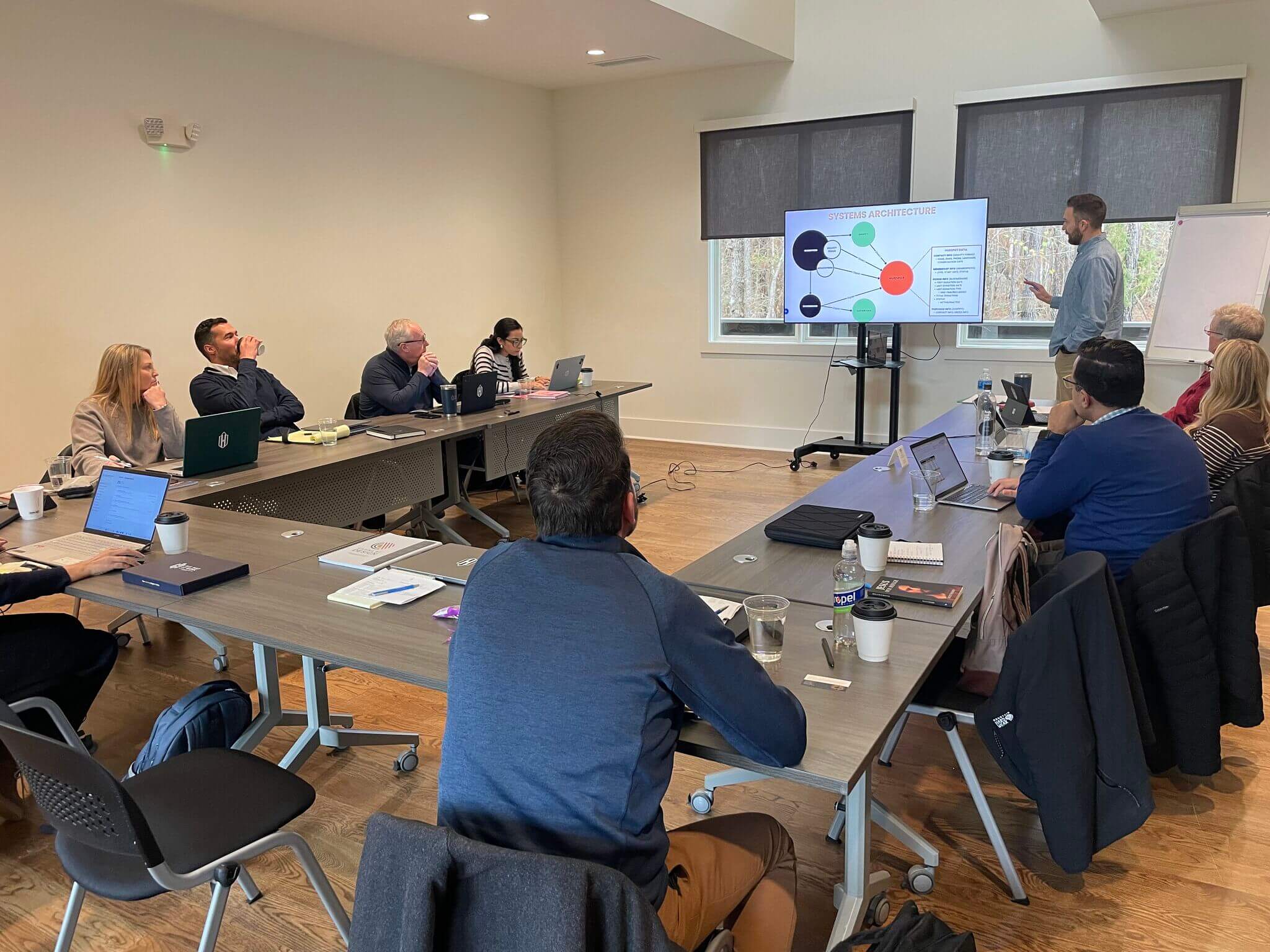
A board retreat is an extended working session held away from the usual meeting space, where a board of directors steps back from routine business to focus on strategy, governance, and its own effectiveness.
The distinction from a typical board meeting matters more than the location. A regular board meeting runs on reports, approvals, and the calendar. A retreat makes room for questions that do not fit in ninety minutes: where the organization is headed, whether the board is doing its job well, and what nobody has said out loud.
Most organizations hold an annual board retreat at the start of a fiscal or program year. The rhythm gives strategic planning a fixed home instead of leaving it to whatever time is left after the finance report. The location follows from the purpose, since a board that meets in its usual conference room tends to behave the way it always does, which is why venues built for corporate and board retreats exist in the first place.
Why Most Board Retreats Fall Short
The failure pattern is consistent, and it is rarely about effort. Boards over-schedule the day, avoid the difficult item, and end with a feeling of alignment that nobody wrote down.
Over-scheduling is the most common mistake. A packed agenda leaves no room for the tangent that turns out to be the most important conversation of the day, and strategic thinking does not happen on a tight clock.
The second failure is subtler. Boards often discuss everything except the thing that needs discussing: a struggling program, tension with the executive director, or a fundraising gap nobody wants to own. Getting out of the building helps, which is part of why boards need to step away from constant busyness.
Start With Objectives, Not an Agenda
The most useful planning happens weeks before anyone books a room. Defining clear objectives is the core of a successful retreat, and doing that well requires high-level strategic thinking as well as careful planning. Decide what the board must be able to do differently when the retreat ends, then build backward.
Three or four objectives is the right number. More than that and the day fragments. A workable set might be: agree on three strategic priorities, resolve board size and composition, and reach a shared understanding of fundraising expectations.
The board chair and executive director should set these together, and engaging board members early increases buy-in. A short survey of board members beforehand surfaces what people are actually thinking, and usually reveals an issue leadership did not know was live. For the logistics side in sequence, use our step-by-step retreat planning checklist.
What Should Be on a Board Retreat Agenda?
Once objectives are set, the agenda becomes a matter of sequencing. A strong nonprofit board retreat agenda should support both strategic planning and team building, moving through core board functions in a deliberate order, opening with context and closing with commitment.
Most agendas include some version of the following:
- Strategic direction. Where the organization stands, and how to align members on strategic priorities for the upcoming year.
- Governance and risk. Board structure, committee function, succession, and the risks the board must watch, while clarifying governance duties versus management responsibilities to strengthen board effectiveness through role clarity.
- The board and CEO relationship. Expectations in both directions, and how performance gets discussed.
- Board development. An honest self-assessment of engagement, attendance, skills gaps, and recruitment.
- Fundraising and financial oversight. For nonprofit organizations, the board's give-and-get expectations and its role in revenue.
Leave the hardest item for mid-morning or early afternoon, never the final hour. Groups do their best work after they have warmed up and before they start watching the clock.
How Long Should a Board Retreat Be?
One full day works for most boards. A day and a half with an overnight works better when the agenda includes a genuinely difficult topic, or when board members do not know each other well.
Three days is almost always too long. Attendance drops, the agenda thins, and the retreat starts to feel like an obligation.
The overnight is worth considering even when the agenda fits in one day. Dinner and an unhurried evening align board members better than any structured exercise, and the second morning is often the most productive stretch.
When to Bring in a Facilitator
A facilitator earns the cost when the board needs to discuss something the chair cannot lead neutrally. Board composition, executive performance, and internal conflict all qualify. An external facilitator can be especially helpful when sensitive issues are on the table, and a nonprofit consultant can facilitate effective board retreat discussions in those moments.
An outside facilitator also frees the chair and executive director to participate rather than run the room. That shift alone changes the discussion, because an external facilitator keeps it focused and on track while offering a third-party perspective.
Facilitators can consolidate diverse opinions into a concrete action plan and let board members fully participate instead of managing the room.
For a straightforward planning retreat with no charged items, a prepared board chair can lead well. The deciding question is not budget, but whether anyone in the room has a stake that would make honest facilitation difficult.
Making Room for the Hard Conversation to Foster Board Engagement
Trust is what lets a board disagree productively, and it comes from time together rather than exercises. This is where team building earns a place at a board of directors retreat, as long as it is not treated as entertainment and the board maintains psychological safety so disagreement stays productive.
The point is not to foster board cohesion for its own sake. It is to build enough familiarity that fellow board members can challenge each other's thinking without it turning personal. When the board needs a lower-pressure conversation, small group discussions can foster teamwork among board members and help directors better understand their roles.
Shared meals, a walk between sessions, and unstructured time work better than anything designed to be an activity. Nothing does more to encourage board members to speak candidly once the formal session resumes, and those moments also build trust and team cohesion.
Choosing a Venue That Supports the Work
Venue selection gets treated as logistics when it is closer to strategy. The setting determines whether the board actually disconnects, and a conference room near the office rarely achieves that.
Boards need three things from a location: privacy, distance from daily interruptions, and space to think. Meeting rooms not shared with a wedding party, meals handled by someone else, and grounds to walk between sessions matter more than they appear on a venue checklist.
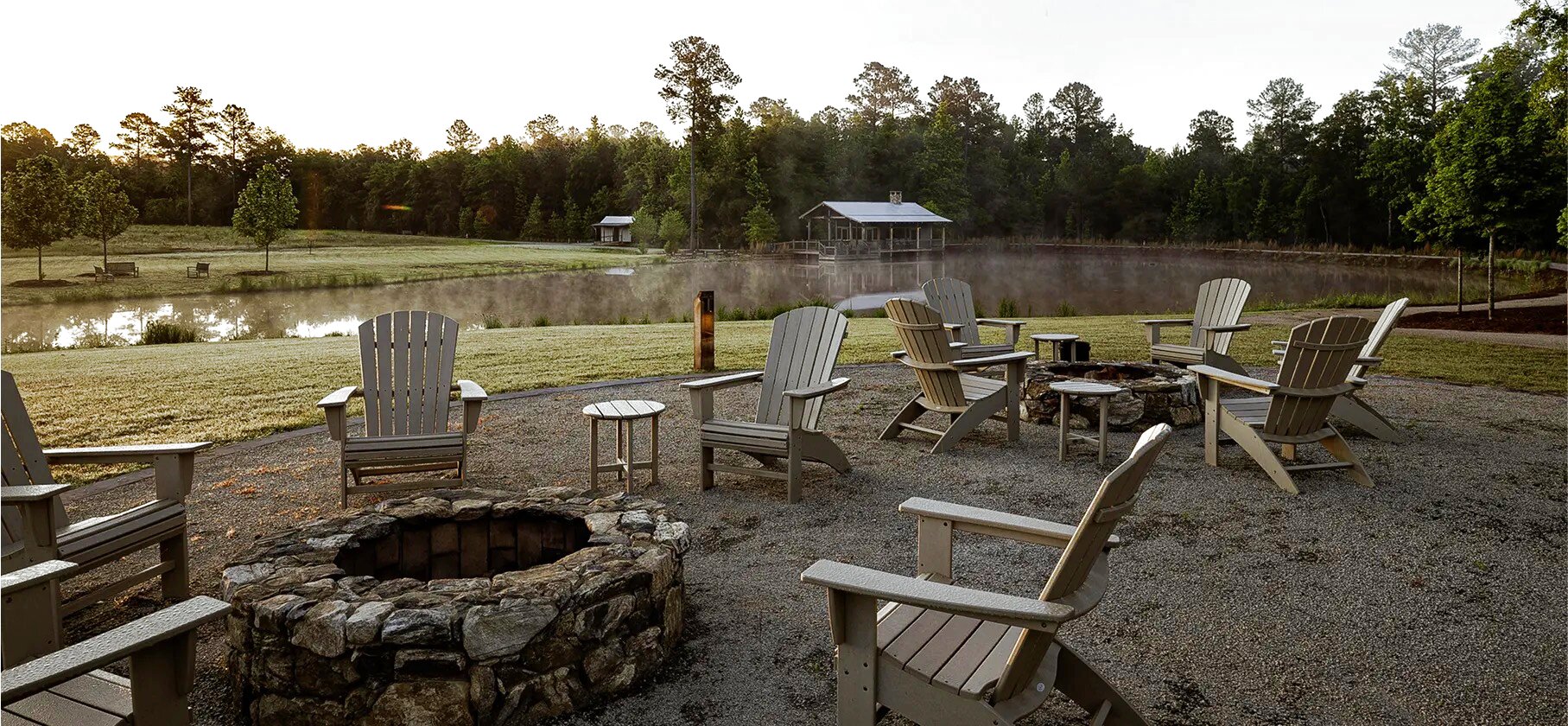
Distance is the underrated factor. Boards searching for a quiet place near Atlanta to host a board or staff retreat are usually trying to get past the point where staff can drop in and email feels urgent. Heritage sits on 200 quiet acres of rural Georgia about two hours from the city, with meeting spaces, chef-prepared meals, overnight accommodations, and walking paths on a private campus.
The same setting works for leadership retreats in Georgia when the group extends beyond the board itself.
End With Owners and Dates
The final hour determines whether the retreat mattered. Reserve it and protect it.
Every decision needs a name and a date attached. A priority that belongs to the whole board belongs to nobody, and a commitment without a deadline quietly becomes a topic for next year's annual retreat.
Send the summary within a week, and put the first checkpoint on the next board meeting agenda. Follow-through is what separates a successful board retreat from a pleasant one.
Time Worth Giving
A board retreat is one of the few chances a board has to work on the organization instead of in it. Done well, it clarifies priorities, helps board members reconnect with the organization's mission, strengthens the board's relationship with its executive, and aligns board and leadership to improve collaboration and accountability, sending people home with something to do.
Done poorly, it costs your board members precious time. The difference is mostly preparation: clear objectives, an agenda with room to breathe, honest facilitation, and a final hour spent assigning ownership.
If your board is planning its next session, Heritage hosts nonprofit and mission-driven boards on a private campus outside Atlanta. Reach out about dates, or read more about planning a group retreat for your organization.
Frequently Asked Questions
Do you take minutes at a board retreat?
It depends on whether the board takes formal action. If a quorum is present and any vote occurs, the session functions as a board meeting and minutes are required under most bylaws and state law. Many boards keep the retreat informal, record summary notes, and hold votes for the next regular meeting.
What is the average cost of a board retreat?
It varies widely by board size, length, and facilitation. A single-day retreat at a local venue can run a few thousand dollars, while an overnight retreat with professional facilitation typically lands in the mid four to five figures. Facilitator fees are usually the largest line item, so get quotes early.
What do you wear to a board retreat?
Business casual is the safe default, and most retreats run more relaxed than a board meeting. If the venue has walking paths, bring comfortable shoes.
What are good nonprofit board retreat activities?
Choose activities that do governance work rather than fill time. Small-group strategy sessions, peer interviews about why members joined, and structured debate on a real decision build board engagement while producing something usable. Once a year is the standard cadence for most nonprofit board retreats.
Where can a nonprofit board hold a retreat near Atlanta?
Look for somewhere far enough from the office that staff cannot drop in, with private meeting space, lodging, and meals handled on site. Heritage sits about two hours from Atlanta on 200 rural acres and hosts corporate and board retreats for nonprofit and mission-driven organizations.