Somebody always ends up in charge. Usually it's the cousin who said "we should really get everyone together" at the last wedding, then discovered nobody else was going to make it happen.
Family reunions are harder to plan than they look. You're coordinating three or four generations across several states on a volunteer budget, trying to please a grandmother who wants a quiet dinner, teenagers who want Wi-Fi, and an aunt who has been asking about the group photo since March.
The good news is that a successful family reunion is mostly a logistics problem, and logistics can be solved. Here's how to plan a family reunion in the order that actually works: the basics, a realistic timeline, the venue, costs, and activities for every age.
What Makes a Great Family Reunion?
The best family reunion isn't the one with the most activities. It's the one where people leave feeling closer than when they arrived.
The reunions people remember share a few traits:
- A clear purpose. A milestone birthday, a first gathering since a loss, or simply keeping cousins connected.
- The right length. Long enough to settle in, short enough that nobody runs out of patience.
- Minimal forced fun. A few anchor events, not a schedule that marches everyone from game to game.
- Room to mix and room to breathe. Space where generations cross paths, plus quiet corners for anyone who needs a break.
Start With the Basics: People, Purpose and Budget
Every planning mistake further down the line traces back to skipping this step. Settle these three things first, and the rest of the planning process gets much easier.
Build a planning committee. Recruit three to five people, ideally one from each branch of the family. Split the work: venue and lodging, activities, money and RSVPs. Then set up one central communication channel, such as a private Facebook group or shared group chat, so everyone stays on the same page.
Define the guest list. Decide whether this is an immediate family gathering or a full extended family reunion with in-laws and second cousins. The guest list drives the venue size, the budget, and how many beds you'll need. A short poll about dates and must-haves surfaces special requests, like an accessible room, while they're still easy to plan around.
Set a detailed budget before you book. List the big categories: lodging, meals, venue, activities, family reunion t-shirts or keepsakes, and a cushion for surprises. Decide how costs will be split now, so nobody feels ambushed later.
Family Reunion Planning Timeline: How Far in Advance to Start
For a larger reunion with lodging, start planning 9 to 12 months ahead. For smaller gatherings, six months is the practical minimum. Most reunions go wrong because planning starts too late: popular venues book up, and save-the-dates arrive after relatives have committed their vacation days.
When
What to Do
12 months out
Form the committee, set the date, choose and book the venue
9 months out
Send save-the-dates, collect deposits, book outside activities
6 months out
Send formal invitations, confirm meals, draft room assignments
3 months out
Confirm final headcount, collect dietary restrictions, order supplies
1 month out
Finalize the agenda and assign day-of jobs
Reunion week
Confirm arrival details and run day-of coordination
Each block matters for a reason. The date and venue come first because everything else depends on them, and avoiding major holidays boosts attendance. Save-the-dates and deposits at nine months turn "maybe" into a real commitment. The six-month invitation is when you share costs, lodging options, and an RSVP deadline. The final headcount at three months lets your venue plan meals and rooms accurately. And a locked agenda a month out means the organizer can actually enjoy the weekend.
How to Choose a Family Reunion Venue
The reunion venue shapes the whole weekend. Choose a place that's too small, too spread out, or too far from most of the family, and even great planning can't fully recover.
What to Look For
- Enough space. One room where everyone can eat together, plus overflow space for smaller conversations.
- Lodging for every generation. Some relatives want a private room and bathroom. Others are happy to bunk with cousins.
- Meals handled for you. A venue that prepares the food removes the biggest source of volunteer burnout.
- Outdoor space for kids to run and explore, and comfortable indoor spaces with shade and seating for older family members.
- Reasonable travel distance from the largest cluster of relatives.
- A backup plan for inclement weather, so a thunderstorm doesn't cancel the main event.
Types of Venues
Most reunions land in one of five categories. Rental home clusters work for mid-size groups, though cooking and gathering space fall to the family. Resorts, campgrounds and state parks offer activities but usually mean sharing the grounds with strangers. Retreat centers combine lodging, meeting space, and meals in one private location, often the simplest option for multi-generational groups. Private ranches offer space but may require outside catering and rentals. Family land is free and meaningful, but someone has to host, cook, and clean up.
Where Heritage Fits
Heritage is a retreat center on 200 quiet acres in rural Georgia, under two hours from Atlanta and about an hour from Augusta and Athens.
Family reunions at Heritage can sleep up to 30 guests in private rooms, or up to 72 when relatives share beds, and the Great Room seats up to 120. Every meal from arrival to departure is prepared by the Heritage culinary team, with dietary restrictions collected at registration, so nobody spends the weekend in the kitchen. Families who want the place to themselves can reserve the entire property.
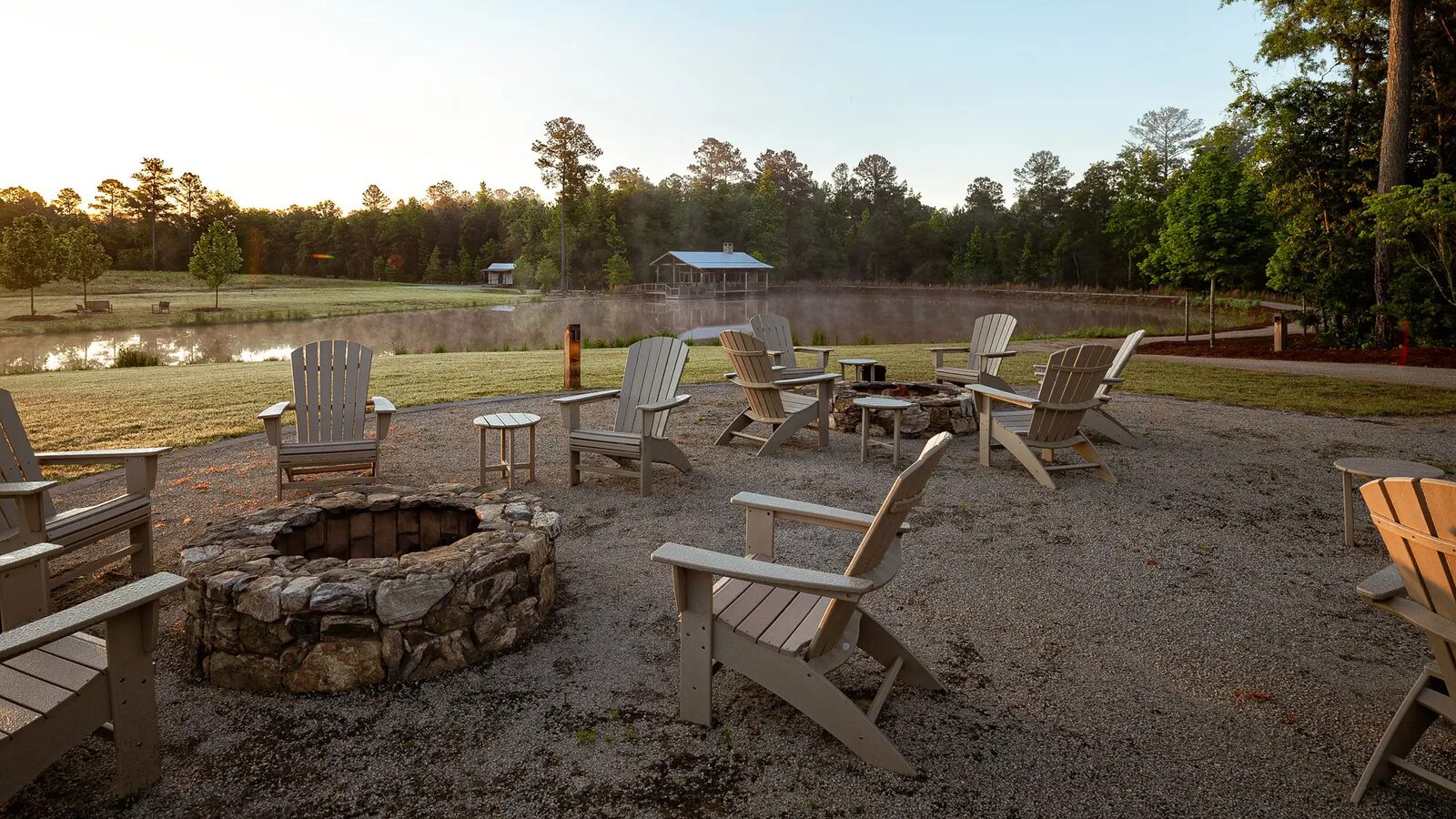
Between meals, kids fish at the pond and explore the walking trails, while older family members settle onto the screened porch or gather around the fire pits. Browse Heritage accommodations or take a look at the Heritage grounds before your next committee call.
How Much Should Each Family Pay for a Family Reunion?
There's no single right number. The fairest approach is to build the budget first, then divide it in a way your family considers reasonable.
Start with a per-person cost: add up lodging, meals, venue fees, activities, and supplies, then divide by the number of adults attending. If the weekend costs $12,000 and 60 adults are coming, that's $200 per adult. From there, adjust:
- Discount kids. Many families charge children half price and let toddlers attend free.
- Split shared costs by household. Venue fees and supplies divide evenly by family, while lodging and meals are paid per person.
- Keep the core affordable. Offer optional paid add-ons for extras.
- Let willing relatives sponsor. Some families quietly cover a share for relatives who can't afford it, or raise money with a family raffle or t-shirt sales.
Publish the structure with the invitation and collect deposits early. Clear numbers up front prevent awkward conversations later.
How Long Should a Family Reunion Last?
For most families, a long weekend is the sweet spot: arrive Friday evening, spend all of Saturday together, and depart after breakfast on Sunday. Larger families traveling long distances sometimes stretch a destination reunion to four or five days, but build in more unstructured time. A packed five-day schedule wears out grandparents and toddlers alike.
Family Reunion Activities for Every Generation
The best family reunion activities give different age groups a reason to be in the same place without forcing everyone to do the same thing. Plenty of family reunion ideas look great online, but these hold up with a mixed-age crowd.
Low-Key Activities
- Photo scavenger hunt. Mixed-age teams hunt for shots on a list, and teens finally use their phones for something.
- Family cookbook project. Each household shares a favorite recipe and the story behind it, compiled afterward into a keepsake.
- Storytelling around the fire. Evening stories from grandparents are often the moments people remember most.
- Family tree and genealogy table. A large printed family tree that relatives fill in with names, dates, and photos.
- Family trivia. Questions about family history and inside jokes pass family memories to the younger generations.
Higher-Energy Activities
- Family softball or kickball game. Easy to organize and works for nearly every age.
- Kids vs. adults games. Tug-of-war or relay races. The kids almost always win.
- Family Olympics. Teams by family branch, with homemade medals.
- Talent show. Everyone from toddlers to grandparents gets a moment in the spotlight.
Leave Room for Downtime
The most important thing on your agenda might be the time you leave empty. Aunts need hours to catch up on the porch, cousins need to disappear down a trail, and grandparents need a nap. Unstructured time is where many lasting memories happen, so protect it.
What Should Be on a Family Reunion Agenda?
A good family reunion agenda anchors each day with a couple of shared moments and leaves the rest open. Here's a sample weekend to adapt:
- Friday: arrivals and check-in, welcome dinner, evening icebreakers or a campfire
- Saturday: breakfast, group photo (do it early, while everyone's still in matching t-shirts), main activity block, lunch and free time, storytelling or family history session, dinner, evening talent show or fire pit
- Sunday: breakfast, farewell gathering, a date for the next family reunion, departures
For sequencing the logistics of any group trip, our step-by-step planning checklist for group getaways walks through each stage.
Your Family Reunion Checklist
Before the big event, make sure you have:
- Venue, lodging, and room assignments confirmed
- Final headcount and dietary restrictions shared with the venue
- Agenda shared, plus name tags for in-laws and younger cousins
- Activity supplies, prizes, and a first aid kit
- A backup plan for bad weather and a shared photo album
Afterward, share photos, thank everyone who helped, and ask for quick feedback. Then set a tentative date for the next reunion before the momentum fades.
Bringing Everyone Together
Planning a family reunion takes patience and a willingness to herd a lot of relatives in the same direction. With a clear purpose, a realistic timeline, the right venue, and a schedule that leaves room to breathe, it's one of the most rewarding events you'll ever organize.
If your family is looking for a place to gather in Georgia, explore family reunions at Heritage or learn more about hosting groups at Heritage. We'd be glad to help your family find room to gather.
Frequently Asked Questions
How far in advance should I plan a family reunion?
Start 9 to 12 months ahead for larger reunions with lodging, and at least six months ahead for smaller gatherings.
How much should each family pay for a family reunion?
Divide total costs by the number of adults attending, then adjust by discounting kids, splitting shared costs by household, and offering optional add-ons.
What makes a great family reunion?
A clear purpose, the right length, a few anchor activities instead of a packed schedule, and room for generations to mix and relax.
How long should a family reunion last?
A long weekend from Friday evening to Sunday morning works for most families. Larger destination reunions can run four to five days.
<script type="application/ld+json">
{
  "@context": "https://schema.org",
  "@graph": [
    {
      "@type": "BlogPosting",
      "@id": "https://www.heritagega.org/blog/how-to-plan-a-family-reunion#article",
      "headline": "How to Plan a Family Reunion: Venue, Timeline and Activities",
      "description": "Learn how to plan a family reunion step by step, with a month-by-month timeline, venue checklist, cost-splitting tips, activities for all ages and a sample agenda.",
      "image": "https://cdn.prod.website-files.com/685bdc36ccfdb9f2bf8fd414/6ab0da7025242f1e7bae0499_how-to-plan-a-family-reunion-heritage.jpg",
      "datePublished": "2026-09-21",
      "dateModified": "2026-09-21",
      "author": { "@type": "Person", "name": "Betsy Orr" },
      "publisher": {
        "@type": "Organization",
        "name": "Heritage",
        "logo": {
          "@type": "ImageObject",
          "url": "https://cdn.prod.website-files.com/684ac91e26e12171592e834b/695e6087607b5378b6b042bd_Heritage-Reg-lg-white.svg"
        }
      },
      "mainEntityOfPage": { "@type": "WebPage", "@id": "https://www.heritagega.org/blog/how-to-plan-a-family-reunion" }
    },
    {
      "@type": "FAQPage",
      "@id": "https://www.heritagega.org/blog/how-to-plan-a-family-reunion#faq",
      "mainEntity": [
        {
          "@type": "Question",
          "name": "How far in advance should I plan a family reunion?",
          "acceptedAnswer": { "@type": "Answer", "text": "Start 9 to 12 months ahead for larger reunions with lodging, and at least six months ahead for smaller gatherings." }
        },
        {
          "@type": "Question",
          "name": "How much should each family pay for a family reunion?",
          "acceptedAnswer": { "@type": "Answer", "text": "Divide total costs by the number of adults attending, then adjust by discounting kids, splitting shared costs by household, and offering optional add-ons." }
        },
        {
          "@type": "Question",
          "name": "What makes a great family reunion?",
          "acceptedAnswer": { "@type": "Answer", "text": "A clear purpose, the right length, a few anchor activities instead of a packed schedule, and room for generations to mix and relax." }
        },
        {
          "@type": "Question",
          "name": "How long should a family reunion last?",
          "acceptedAnswer": { "@type": "Answer", "text": "A long weekend from Friday evening to Sunday morning works for most families. Larger destination reunions can run four to five days." }
        }
      ]
    }
  ]
}
</script>

.jpg)