There are places where history is not simply remembered, but encountered—where faith is not only studied, but lived. Heritage offers such a place. For those drawn to historic preservation, sacred architecture, and the enduring witness of the Church across time, Heritage invites you into something deeper than a visit: a pilgrimage.
Rooted in the Catholic tradition and open to all Christians, Heritage preserves and sustains spaces where prayer has been offered for generations. These are not static landmarks or curated exhibits. They are living places of grace—where the past and present meet, and where those who come with attentive hearts may encounter God in quiet and profound ways.
The Church: A Living Witness of Faith
At the heart of Heritage stands its historic church, a place shaped by centuries of Catholic worship and devotion. From the moment you enter, you are invited into a different rhythm—one marked by reverence, stillness, and beauty.
The architecture itself speaks. Every arch, window, and carefully crafted detail reflects a theology of presence: that God meets us in material things, in spaces set apart, in places made holy through prayer. The altar, the focal point of the church, reminds us that this is not merely a historic structure—it is a sacred space where the mysteries of faith have been celebrated across generations.
For preservationists, the church offers a rare opportunity to experience craftsmanship and design that have endured the passage of time. For pilgrims, it offers something even more essential: a place to kneel, to pray, and to listen. The silence here is not empty; it is full—carrying the prayers of those who have come before and inviting new prayers to be added.
Whether you come for quiet reflection, to attend a service, or simply to sit in stillness, the church stands ready to receive you—not as a visitor passing through, but as a participant in an ongoing story of faith.
The Cemeteries: Memory, Hope, and Communion
Surrounding the church and extending into the wider landscape are historic cemeteries—sacred ground entrusted to Heritage’s care. At first glance, they may appear as places of rest and remembrance. But for those who walk them slowly, they reveal themselves as something more: witnesses to lives lived in faith, and signs of hope rooted in the promise of resurrection.
Each marker tells a story. Names, dates, inscriptions—these are fragments of lives once fully lived: families who built communities, individuals who served the Church, men and women whose faith shaped their daily lives in ways both ordinary and extraordinary. For those who love historic preservation, these cemeteries are invaluable archives, offering insight into local history, craftsmanship, and cultural memory.
Yet to approach them only as historical artifacts would be to miss their deeper meaning. In the Catholic tradition, cemeteries are consecrated ground, set apart as places where the faithful departed await the fullness of resurrection. To walk among them is to be reminded that we are not alone—that we belong to a communion that transcends time.
For pilgrims, this awareness can be deeply moving. The distance between past and present begins to feel smaller. The lives commemorated here are not distant or irrelevant; they are part of the same story into which we ourselves have been drawn. In this way, the cemeteries become places not only of remembrance, but of connection—a quiet encounter with the “great cloud of witnesses” who surround us.
The Retreat: Space for Renewal
While the church and cemeteries anchor Heritage in history, the retreat setting extends an invitation into the present moment. Set apart from the noise and urgency of everyday life, this space offers something increasingly rare: the opportunity to be still.
Pilgrimage has always involved movement—not only across physical distance, but into deeper awareness. The retreat experience at Heritage allows that movement to continue. Here, individuals and groups can step away from distractions and enter into a rhythm of prayer, reflection, and rest.
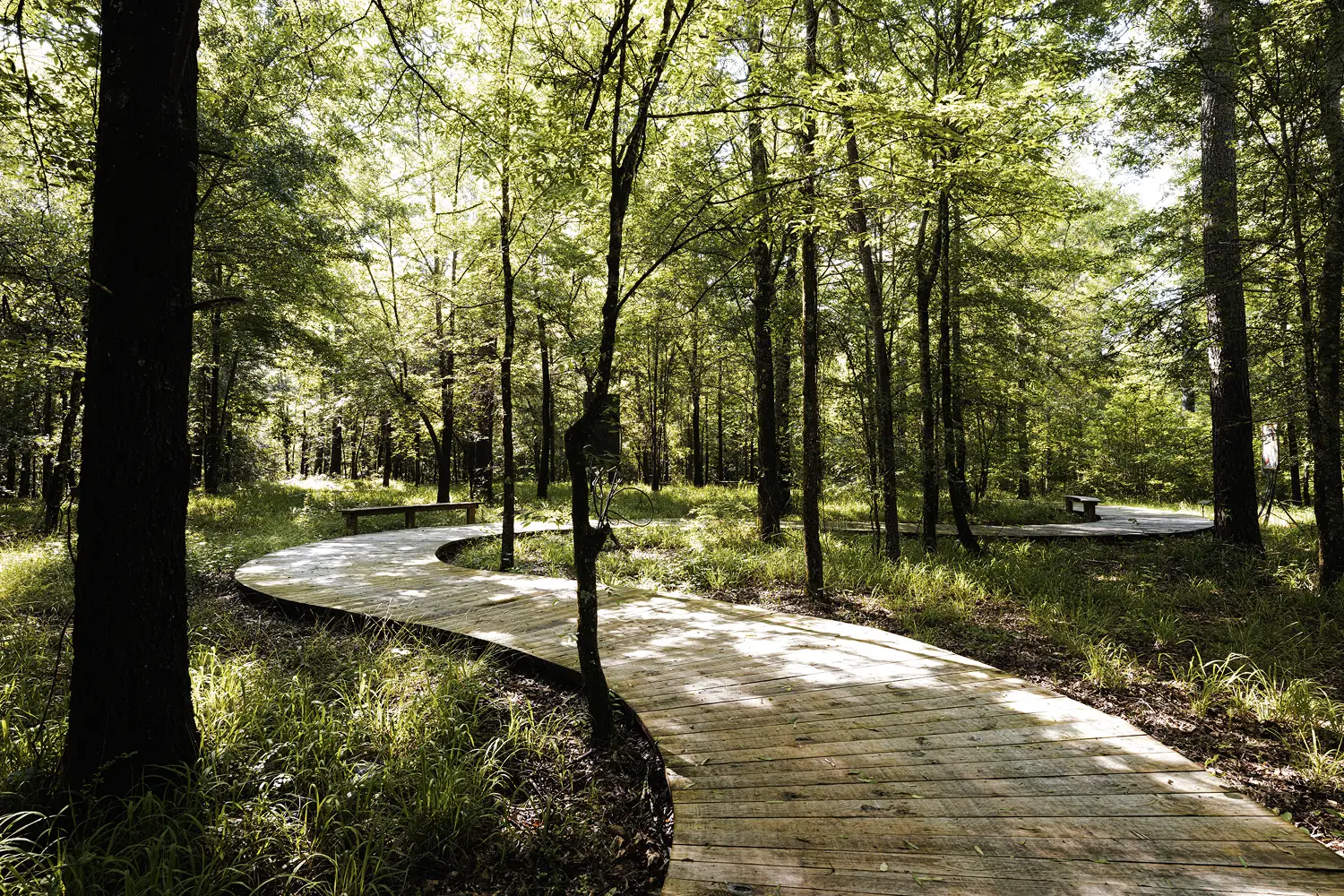
The land itself plays a role in this transformation. Quiet paths, open skies, and the natural beauty of the surroundings create an environment where attentiveness becomes possible again. Time slows. Conversations deepen. Silence becomes less uncomfortable and more welcoming.
For those who come seeking renewal, the retreat setting provides the conditions for it—not by offering constant activity, but by making space. Space to pray. Space to reflect. Space to listen for God in ways that are often difficult in the busyness of daily life.
Whether for a day or a longer stay, the retreat invites you to rediscover something essential: that rest is not an absence of purpose, but a necessary part of the spiritual journey.
Preservation as a Spiritual Calling
At Heritage, preservation is not an end in itself. It is a means of stewardship—an act of care rooted in the belief that sacred places matter, and that they continue to shape lives long after their original builders are gone.
To preserve a church is to preserve a place where people can encounter God. To care for cemeteries is to honor the dignity of those who came before and to maintain a visible connection between generations. To maintain a retreat setting is to ensure that there remains a place where people can step away and be renewed.
This work requires attention, dedication, and love. It also requires a vision that sees beyond the present moment—a commitment to ensuring that these places will continue to serve future generations of pilgrims and faithful visitors.
For those who are passionate about historic preservation, Heritage offers a compelling model: one in which preservation is not merely about conserving structures, but about sustaining meaning. The goal is not simply to protect what was, but to ensure that what was continues to speak, to inspire, and to draw people closer to God.
An Invitation to Pilgrims
In an age of constant movement and distraction, pilgrimage offers a different kind of journey—one marked by intention, reflection, and openness to encounter. Heritage stands as a place where such a journey can begin, continue, or deepen.
You do not need to be an expert in history to appreciate what is here. You do not need to be Catholic to feel the weight of these sacred spaces or to be moved by their beauty. You need only to come with a willingness to slow down, to notice, and to be present.
Walk through the church and sit in its quiet. Wander the cemeteries and read the names of those who have gone before. Spend time in the retreat setting and allow yourself to rest. In each of these experiences, something subtle yet meaningful can unfold—a renewed sense of connection, a deepened awareness of faith, or simply a moment of peace.
Heritage is not a destination to be checked off a list. It is a place to linger, to return to, and to carry with you long after you leave.
We invite you to come—not just as a visitor, but as a pilgrim.
.jpg)
.jpg)